How to Choose the Best Milling Machines for Your Needs?
Choosing the right Milling Machines is crucial for any workshop. As John Smith, a leading expert in industrial machining, states, "The right machine makes all the difference in precision and efficiency." With various options available, it can be overwhelming to select the best fit for your needs.
Milling Machines come in different types and sizes. Each design serves distinct purposes and applications. For instance, vertical and horizontal mills offer unique capabilities. Consider the materials you will be working with, as they impact machine selection. Certain materials require specific tooling options.
It's important to assess your budget and long-term goals. Some machines may offer advanced features but come with a high price tag. Reflecting on what you truly need can help you make a more informed decision. Balancing your current capabilities with potential growth is essential.
Understanding Different Types of Milling Machines Available on the Market
Milling machines come in various types, each catering to specific needs. Understanding these types helps in making informed decisions. Vertical milling machines are commonly used for their versatility. They feature a spindle that is oriented vertically, allowing for precise cuts. According to a 2022 industry report, vertical mills account for over 60% of the milling market share, illustrating their popularity.
Horizontal milling machines, on the other hand, have a horizontally oriented spindle. They are ideal for larger workpieces and faster operations. While horizontal mills offer efficiency, they can be more complex to operate. A recent survey revealed that about 45% of manufacturers prefer horizontal machines for their robust performance, but they require skilled operators.
Lastly, computer numerical control (CNC) milling machines are at the forefront of modern machining. They are versatile and can perform intricate tasks with high accuracy. However, the initial investment is significant. In 2023, reports indicated that CNC machines represented 30% of all milling machine sales, highlighting their rising dominance. Prospective buyers should weigh the benefits against these costs. Balancing functionality with budget constraints is a continual challenge in the decision-making process.
Comparison of Different Types of Milling Machines
Key Features to Consider When Choosing a Milling Machine
Choosing the right milling machine requires careful consideration of various features. One critical aspect is the machine's type.
Vertical milling machines excel at handling smaller, intricate parts.
Horizontal machines, on the other hand, are suited for larger components.
Knowing your specific projects will guide your decision.
Another key feature is the milling machine's power. Machines with higher horsepower can tackle tougher materials and larger workloads.
Speed control is equally important. A good machine offers multiple speed settings, catering to different tasks.
Don’t overlook the machine’s size and weight. A compact unit may fit better in small shops.
However, heavier machines provide stability and enhanced precision. Always consider your workspace.
Most importantly, assess ease of use. A user-friendly interface is vital, especially for beginners.
Maintenance should be straightforward to ensure longevity. Reflect on your current skills and the learning curve of new machines.
Assessing Your Milling Needs: Size, Material, and Precision
Choosing the right milling machine begins with a clear assessment of your milling needs. Key factors include size, material, and precision. According to industry reports, nearly 40% of manufacturers prioritize these aspects when purchasing milling machines. Understanding the scale of your operations influences the machine's dimensions. For small workshops, compact machines may suffice, while larger operations may require robust, heavy-duty models.
Material selection is also crucial. Different milling machines handle various materials, from soft metals to hard alloys. A report indicated that machines designed for hard materials often have a higher return on investment. Precision is another vital factor; industries aiming for tight tolerances tend to invest in high-precision machinery. About 30% of manufacturers reported that precision impacts not just quality but also efficiency and waste reduction in production.
Despite the wealth of options, it is essential to reflect on your specific requirements. Choosing a machine that exceeds your current needs can lead to unnecessary costs. At the same time, selecting an underperforming model may hinder production. Many users report feeling overwhelmed by the technical specifications. A thoughtful evaluation of your needs is critical for making an informed decision.
How to Choose the Best Milling Machines for Your Needs?
| Milling Machine Type |
Ideal Material |
Size (inches) |
Precision (mm) |
Best Uses |
| Vertical Milling Machine |
Aluminium, Wood |
10 x 54 |
0.05 |
General machining, drilling |
| CNC Milling Machine |
Steel, Copper |
20 x 40 |
0.01 |
Complex parts manufacturing |
| Bed Milling Machine |
Iron, Aluminium |
16 x 63 |
0.03 |
Heavy-duty machining |
| Universal Milling Machine |
Plastic, Wood, Steel |
12 x 36 |
0.02 |
Versatile operations |
| Turret Milling Machine |
Brass, Copper |
9 x 42 |
0.04 |
Precision parts |
Budget Considerations for Buying a Milling Machine
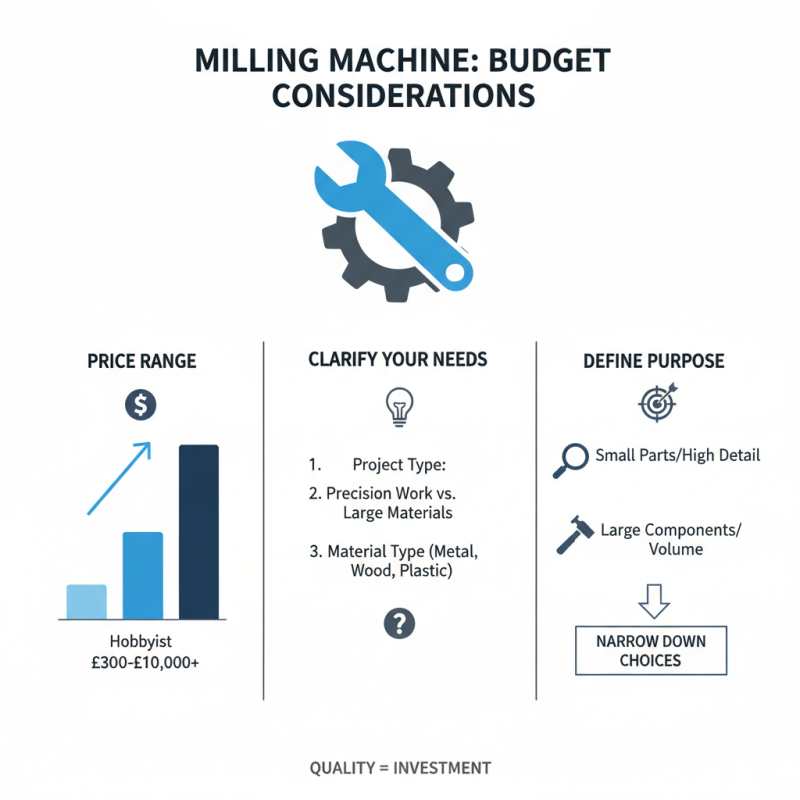
When considering a milling machine, budget is a critical factor. A high-quality machine can range from a few hundred to several thousand dollars. It's important to clarify your needs before making a purchase. Analyze the projects you plan to undertake. Will you focus on precision work or larger materials? A well-defined purpose can narrow down your choices.
Price alone doesn't guarantee performance. Assess the features you require—horsepower, size, and control options. For example, a lower-priced machine may sacrifice power. Keep an eye on operational costs as well. Maintenance expenses can add up over time. Investing in quality may save you money long-term.
Don't rush your decision. Take time to compare options. Visit local shops and talk to experts. Gathering advice will help you make an informed choice. Be prepared to reevaluate your budget based on your findings. Flexibility may lead to better options. Remember, it’s not just about spending less; it’s about finding value. Each choice has its trade-offs.
Maintenance and Support Options for Milling Machines
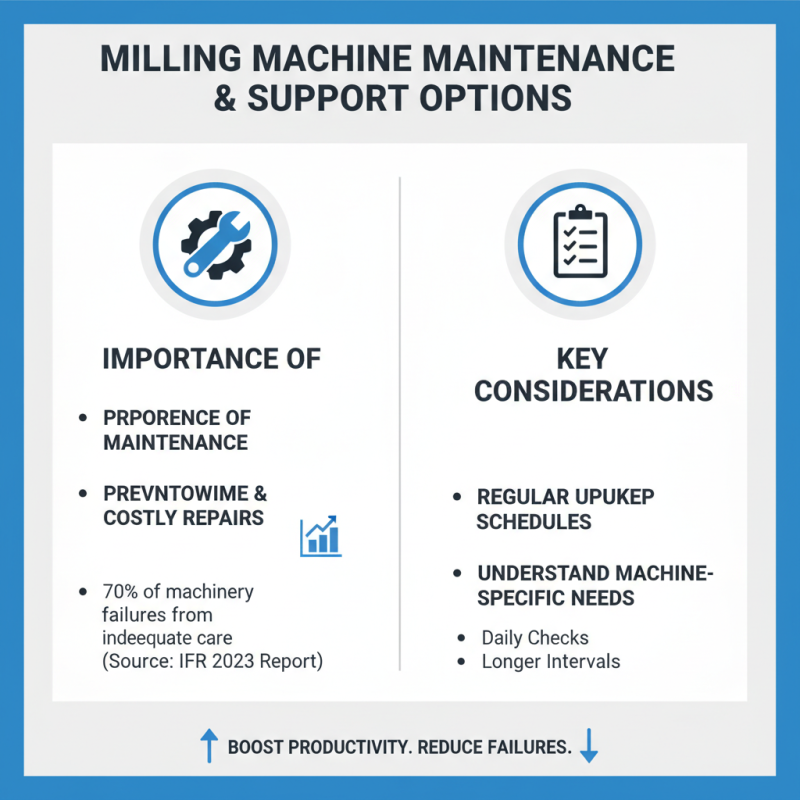
When selecting a milling machine, maintenance and support options are crucial. According to a 2023 report by the International Federation of Robotics, 70% of machinery failures stem from inadequate maintenance. Regular upkeep prevents downtime and costly repairs. Understanding a machine’s maintenance requirements is essential for productivity. Some machines require daily checks, while others may have longer intervals.
Support options vary widely. Many manufacturers offer warranties that cover both parts and labor. Comprehensive service packages can ensure rapid response times. A study from the Manufacturing Technology Association noted that machines with robust support plans have lower operational risks. On-site support can be a game changer, providing immediate assistance when issues arise.
However, not all support packages are created equal. Assessing the reputation of the service team is vital. A poorly rated support service can lead to frustration and increased downtime. Engaging with user communities can provide insight into real-world experiences. It’s important to reflect on service reliability and potential hidden costs associated with long-term support.