What are the Benefits of Using 4 Axis Machines for Your Projects?
In today's manufacturing landscape, the precision and versatility of 4 Axis Machines are transforming project development. According to a report by MarketsandMarkets, the CNC machining market is projected to reach $100 billion by 2026, driven largely by the adoption of advanced machining technologies. These machines allow for intricate designs and complex geometries, enhancing production efficiency. With the capability to rotate around an additional axis, they offer unique advantages over traditional 3-axis machines.
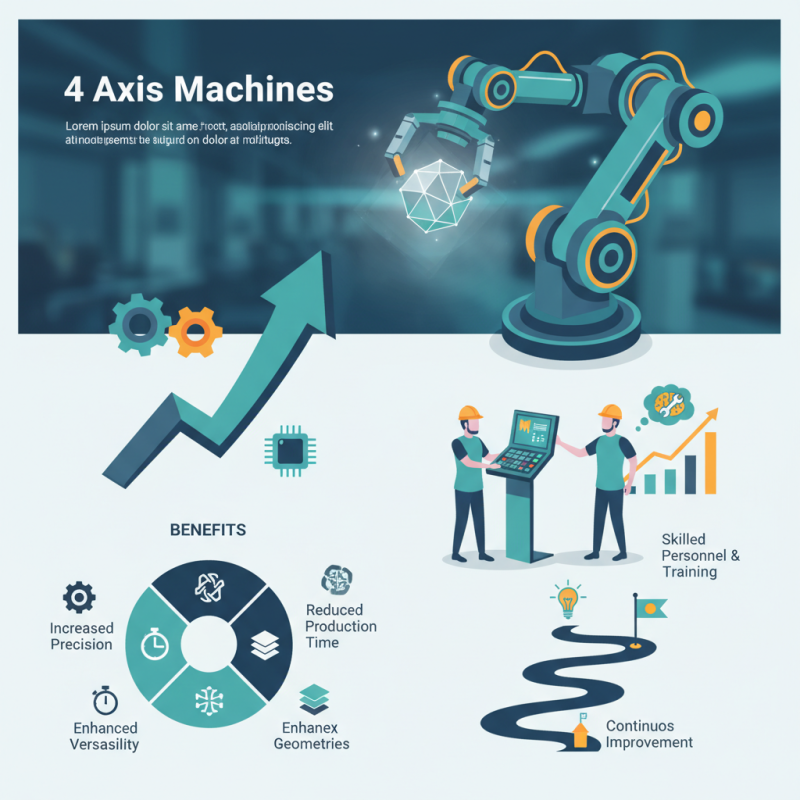
4 Axis Machines enable manufacturers to tackle challenging projects with ease. They can significantly reduce production time and improve accuracy. However, a study by Grand View Research highlights that while adoption rates are increasing, many companies still face hurdles in effective implementation. This underscores the need for skilled personnel and adequate training in using these machines. The benefits are clear, but the path to optimization requires reflection and a commitment to continuous improvement.
Advantages of 4 Axis Machines in Precision Engineering
In precision engineering, 4 Axis machines offer significant benefits. These machines enhance the ability to work with complex geometries and intricate designs. With an added rotary axis, they allow for multi-faceted operations that traditional 3-axis machines cannot handle. This capability results in higher accuracy and reduces the need for multiple setups.
The flexibility of 4 Axis machining is particularly noteworthy. It enables engineers to machine all sides of a component without repositioning it. This efficiency can lead to time savings and diminished risks of inaccuracies caused by manual handling. However, mastering this technology requires experience. Operators must understand the nuances of programming and setup. Mistakes can lead to costly errors or wasted materials.
Another aspect to consider is maintenance. While 4 Axis machines are advanced, they also require regular upkeep. Neglecting maintenance can affect precision over time. It's essential to continually review operations and performance metrics. Identifying and addressing potential issues proactively can enhance reliability. Balancing innovation and practicality is crucial for successful implementation in precision engineering.
Enhanced Flexibility for Complex Project Designs
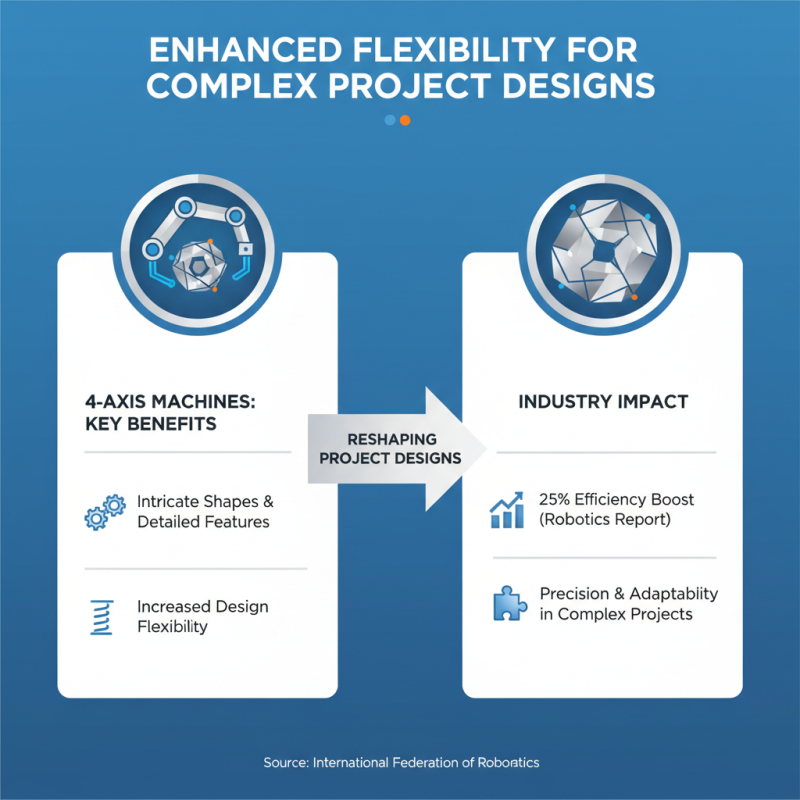
4 Axis machines are reshaping project designs across various industries. These innovative tools enhance flexibility, allowing for intricate shapes and detailed features. According to a report by the International Federation of Robotics, companies that integrate advanced machining processes see a 25% increase in efficiency. This flexibility benefits teams working on complex projects, where precision and adaptability matter most.
The ability to work on multiple axes simultaneously allows creators to optimize workflows. As projects demand more intricate designs, traditional machining falls short. A survey by the Manufacturing Institute found that 78% of manufacturers faced challenges with complex geometries. Here, 4 Axis machines shine, offering solutions that make previously impossible designs feasible.
Despite their advantages, there are challenges to consider. Learning curves can be steep, and not all operators may be trained adequately. A lack of expertise can lead to mistakes that negate the benefits of advanced technology. Reflections on such experiences highlight the need for proper training and continuous skill development in the workforce. As technology evolves, businesses must adapt to ensure they fully utilize these machines' capabilities.
Improved Efficiency and Time Savings in Production Processes
4-axis machines have become vital in modern manufacturing. They offer unique advantages that significantly enhance productivity while saving time. The integration of rotation capabilities streamlines the machining process. You can achieve intricate designs in fewer steps, reducing the need for multiple setups. This not only saves time but also minimizes human error during setup.
Consider a project that requires drilling, milling, and engraving. With a 4-axis machine, all these operations can be performed sequentially. This eliminates the need to reposition the workpiece frequently. Consequently, you spend less time adjusting tools and fixtures. Moreover, quicker completion means projects can be delivered faster.
However, integrating such technology isn’t without challenges. Operators must learn new programming skills. This can lead to initial inefficiencies as teams adapt. The learning curve might slow down production temporarily. Despite these hurdles, the long-term benefits often outweigh these initial setbacks. Over time, businesses that embrace this technology may find substantial gains in productivity and efficiency.
What are the Benefits of Using 4 Axis Machines for Your Projects?
| Benefit |
Description |
Impact on Production |
| Improved Accuracy |
4 axis machines can deliver more precise machining due to coordinated movement. |
Reduces waste and rework, ensuring higher quality products. |
| Complex Shape Capability |
Ability to machine intricate geometries that are difficult for 3 axis machines. |
Expands design possibilities, allowing for innovative product designs. |
| Time Savings |
Fewer setups needed for complex parts, leading to quicker turnaround times. |
Increases overall production speed and efficiency. |
| Enhanced Productivity |
Simultaneous movement reduces machining time for complex tasks. |
Drives higher output without sacrificing quality. |
| Reduced Labor Costs |
Automation leads to less manual intervention required during production. |
Lowers the overhead costs associated with labor-intensive processes. |
Increased Design Versatility for Customized Applications
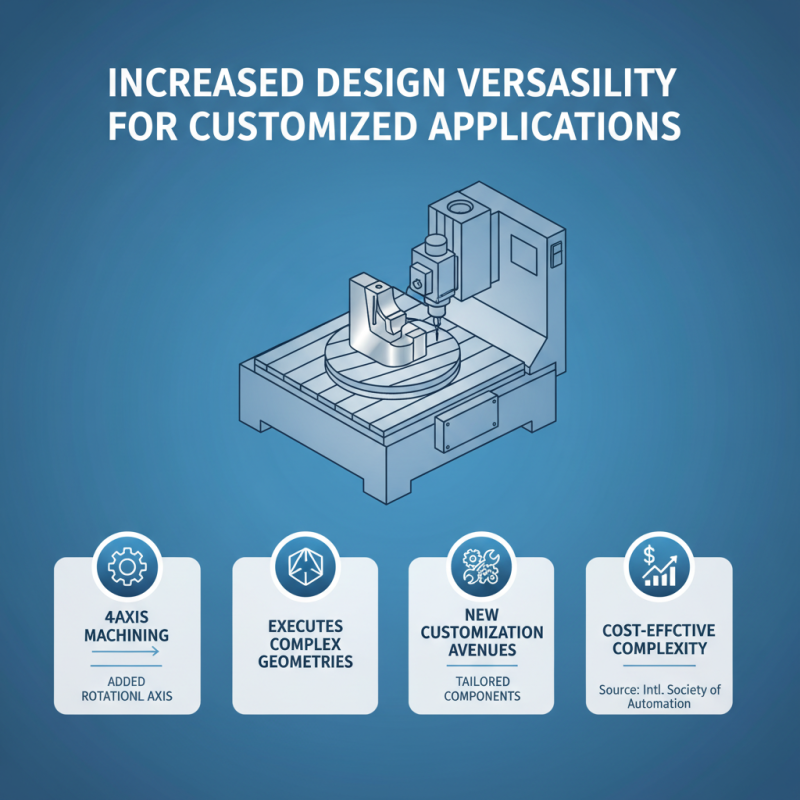
The flexibility of 4-axis machines significantly enhances design versatility. With an additional rotational axis, these machines can execute complex geometries. This opens up new avenues for customization, allowing engineers to create intricate components tailored to specific project requirements. According to a study by the International Society of Automation, 4-axis machining can increase part complexity without a proportional rise in cost, making it an attractive option for manufacturers.
Moreover, the efficiency gained from 4-axis machining is noteworthy. The ability to manipulate the workpiece at various angles means that setups and tooling changes are minimized. A report by the Manufacturing Technology Association states that companies can achieve up to 30% reduction in lead times with these advanced machines. However, the learning curve can be steep, and initial investment costs may deter some smaller shops. Balancing the benefits of versatility against these challenges is essential for potential users.
Designers can leverage the superior capabilities of 4-axis machines to produce unique inventory items or specialized prototypes. The key is to understand both the advantages and limitations inherent in adopting this technology. While the potential for customized applications is vast, ongoing training and investment are necessary to fully harness their capabilities effectively.
Cost-Effectiveness Over Traditional Machining Methods
4-axis machines have emerged as a transformative solution in modern machining. The cost-effectiveness of these machines stands out when compared to traditional machining methods. They allow businesses to streamline processes, reducing the need for multiple setups. This efficiency can lead to significant savings on labor and time.
Many manufacturers find that 4-axis machines offer greater precision. They can produce complex parts in one continuous operation. This capability minimizes errors, which can be costly. However, initial investment costs might be higher. It's essential for businesses to weigh the long-term savings against upfront expenses.
Not every project is suitable for a 4-axis machine, and that’s worth considering. Some simpler tasks may not justify the extra expense. Proper planning and analysis are crucial to determine suitability. Investing in the right machinery can elevate production standards, but it requires careful consideration. Companies must continuously assess whether they are optimizing their resources effectively. Balancing technology with project needs is key to truly reaping benefits.
Benefits of Using 4 Axis Machines for Your Projects